


Analiza ustawy o IPN w języku angielskim. Warto to pokazać światu!

Instytut Ordo Iuris przygotował analizę prawną w języku angielskim dotyczącą nowelizacji przepisów o IPN. Zapraszamy do zapoznania się z nią oraz do szerokiej dystrybucji wśród naszych zagranicznych przyjaciół.
The world-wide discussion on the Polish draft law amending the Act on the Institute of National Remembrance - Commission for the Prosecution of Crimes against the Polish Nation (Sejm Paper no. 771) shows the difference between the letter of the law and its creative and often selective interpretation in the public debate. As a result, two contradictory positions have been visible in the comments on the bill. On the one hand, the Article 55a has been seen as an attempt to clamp down historical debate on unlawful acts committed by Polish citizens during World War II or limit "testimonies of the Holocaust survivors", on the other, the concern for historical truth, dignity and Polish politics of memory has been emphasized.
A legal analysis of the bill should start from a platitude - the responsibility for the atrocities and crimes committed during the Second World War on citizens of many countries occupied by Third German Reich (including Poland) rests with the Third German Reich.
Historical background: millennium of peaceful coexistence
To understand Polish efforts to protect the historical truth about the actual perpetrators responsible for the Holocaust, it is necessary to remind the traditional and long-lasting peaceful coexistence of Jewish and Polish communities in Poland. Polish Kingdom respected customs, religion and autonomy of Jewish communities as confirmed by many statutes issued by kings and princes. Polish king Casimir III the Great confirmed in 1334 the privileges granted to Jews in 1264 by Bolesław V the Chaste and allowed them to settle in Poland in great numbers as “people of the king”. Polish Kingdom became an asylum for Jews who were harassed in other countries.
Before Second World War, Polish independent state (Second Polish Republic 1918-1939) guaranteed equal rights and freedoms for Jewish minority (10% of population). Many Jews ran active and successful political careers (Joshua Gotlieb, Wacław Wiślicki, Herman Lieberman, Jerzy Rosenblatt). Between 1922-1927 there were 35 members of Polish House of Deputies, who represented Jewish political parties. Many polish Jews were active in the field of culture (e.g. Isaac Bashevis Singer – writer, Władysław Szpilman – musician, Jan Kiepura – musician, Jan Brzechwa – poet) and education (e.g. historican Szymon Askenazy) of the Second Polish Republic. Jews established their own newspapers (Nasz Przegląd – Our Review), exercised freely their religion freedom. In 1939 Poland was home to the largest Jewish community in Europe.
It is important to underline that the attitude of Poles to Jews during Second World War was unique in comparison to other nations under the occupation of Third German Reich. Polish Nation did not establish any form of institutional collaboration with Germans. Polish Underground State was established in 1939 by the government in exile in London with primary mission to oppose the German occupation. According to laws issued by Polish authorities, all acts of collaboration with the Nazis were threatened with death penalty. Any actions against Jews were forbidden and severely punished. The army of the Underground State called Armia Krajowa(Home Army) executed almost 4.000 of judgements given by the Secret Courts against those who collaborate with German occupant.
In 1942 Polish government in exile in London published report of Jan Karski informing officially the Allied forces for the first time about the mass extermination of Jews. Polish demand for immediate reaction of US and British governments followed. Also in 1942, the Directorate of Civil Resistance, part of the Polish Underground State, issued a following declaration: For nearly a year now, in addition to the tragedy of the Polish people, which is being slaughtered by the enemy, our country has been the scene of a terrible, planned massacre of the Jews. This mass murder has no parallel in the annals of mankind; compared to it, the most infamous atrocities known to history pale into insignificance. Unable to act against this situation, we, in the name of the entire Polish people, protest the crime being perpetrated against the Jews; all political and public organizations join in this protest.
‘Delegatura’, the supreme political body of the Polish Underground State, financed and sponsored Council to Aid Jews (‘Żegota’) with around 100 cells distributing relief funds to Jewish community. Since 1942 ‘Żegota’ was granted by ‘Delegatura’ nearly 29 million złotys (over $5 million; or, 13.56 times as much in today's funds). ‘Żegota’ children’s section was headed by Irena Sendler, nominated for a Nobel Prize before her death in 2008, who organized help for children from the Warsaw Ghetto and saved almost 2.500 of them. The Polish Underground State provided special assistance, funds, arms and supplies to Jewish resistance organizations (like Jewish Combat Organization – Żydowska Organizacja Bojowa).
Under the German occupational regulations from 1941 any form of help for Jews on the Polish occupied territory was punished with death. Nevertheless, even up to 1 million Polish people [related to historian Richard Lucas (2012)] decided to support their Jewish neighbors. Many of them paid the highest price of their lives (e.g. execution of Ulm’s Family in 1944; pacification of village Bór Kunowski in 1943).
6706 Polish people were decorated with the Righteous Among the Nations honorific by Yad Vashem and State of Israel, constituting the most numerous group of awards granted to citizens of a single country.
However, it is also true that during the German Nazi occupation there were disgraceful cases of Polish citizens handing over Jews to Nazi authorities, taking over their property or committing ordinary murders and beating them up. Nobody questions today that documented outrageous incidents are worthy of condemnation.
In 2013 POLIN Museum in Warsaw was opened with its mission to recall and preserve the memory of the history of Polish Jews, contributing to the mutual understanding and respect amongst Poles and Jews as well as other societies of Europe and the world.
"Polish death camps" phrase is close to the Holocaust denial by diminishing responsibility of actual perpetrators
Presentation of the historical context is essential for correct analysis and understanding of the draft law in question. In the rationale for the legal act, the bill authors stressed that the amendment is aimed at combating the false nations of "Polish concentration camps", "Polish death camps" or "Polish extermination camps", that appeared increasingly frequently instead of name pattern internationally accepted for Konzentrationslager Auschwitz-Birkenau: “Former German Nazi Concentration and Extermination Camp”.
Due to the lack of dedicated legal instruments, Polish jurisprudence has indicated the application of moral rights protection under the Civil Code when German Nazi responsibility for Holocaust is diminished by blaming Polish nation and the state with complicity. In a famous case brought against ZDF by Karol Tendera, former prisoner of German Nazi Concentration and Extermination Camp Auschwitz-Birkenau, the Court of Appeal in Krakow stated on 22nd of December 2016: “the wording ≪Polish death camps≫violates moral rights of the plaintiff (...) such as human dignity, national identity and national dignity. For this is a false statement that falsifies history and suggests that the Polish nation is the perpetrator of Nazi crimes.” The verdict has been officially recognized and enforced by German court in January 2018.
Court-law have confirmed that the harmful statements about allegedly “Polish concentration camps” entitle every member of the Polish nation to take legal action. In the judgment of the District Court in Warsaw of 5 January 2018, it can be read that “the wording, the rectification of which was demanded by the plaintiff, concerning concentration camps defined as Polish or created by Poles directly affect the plaintiff's assessment as a person belonging to the Polish nation.” This is perfectly confirmed by the position of the Court of Appeal in Warsaw, which stated on 31st of March 2016: “In the opinion of the Court of Appeal, in order to recognize the violation of the sense of national identity as a result of statements about Polish concentration camps, it is not necessary to include in its content any reference to a specific person as part of the Polish national community. The above-mentioned statement directly menaced the values related to the individual's participation in the community, naturally shaping his or her personality. It enters the sphere of values underlying the protection of respect conceived as personal dignity. It affects the sphere of continuation associated with participation in the Polish national community, being the same, retaining continuity. The present existence of the national community is an extension of existence in the past. The words about Polish concentration camps violate the plaintiff’s right to identify with the people who experienced the crime of concentration camps and whose ancestors (grandparents) were persecuted in concentration camps”.
One step further to protect historical truth
Since there is no doubt that from the point of view of historical facts and the jurisprudence of common courts, the wording "Polish concentration camps" or "Polish death camps" entitle every member of the Polish nation to instigate civil proceedings for offensive wording, the originators of the wording of Article 55a went a step further. They have provided for the most far-reaching criminal sanction. Hence, it is included in chapter 7 of the 1998 Act on the Institute of National Remembrance - the Commission for the Prosecution of Crimes against the Polish Nation entitled "Penal Regulations".
The proposed provision of Article 55a if of the following wording:
Art. 55a. 1. Anyone attributing, in public and against facts, responsibility or co-responsibility to the Polish Nation or to the Polish State for the Nazi crimes committed by the Third German Reich defined in Article 6 of the Charter of the International Military Tribunal annexed to the International Agreement on the prosecution and punishment of major war criminals of the European Axis, signed in London on 8 August 1945 (Journal of Laws of 1947, Item 367), or for other offenses constituting crimes against peace, humanity or war crimes or otherwise grossly reducing the responsibility of the actual perpetrators of these crimes shall be subject to a fine or imprisonment of up to 3 years. The judgment shall be made public
2. Should the perpetrator of the act referred to in Section 1 act unintentionally, they shall be subject to a fine or restriction of liberty.
3. Perpetrator of the act referred to in Section 1 and 2 does not commit a crime if he has committed this act as part of their artistic or scientific activity.
Article 55a provides for criminal liability for three types of conduct”
The first is " in public and against the facts of responsibility or co-responsibility” to the Polish Nation or the Polish State for the Nazi crimes committed by the Third German Reich as defined in Article 6 of the Charter of the International Military Tribunal annexed to the International Agreement on the prosecution and punishment of major war criminals of the European Axis, signed in London on 8 August 1945 (Journal of Laws of 1947, Item 367). The provisions of Article 6 of the Charter defined the jurisdiction of the Tribunal and stated its competence in judging 1) crimes against peace, 2) war crimes and 3) crimes against humanity committed by persons in the interest of the so-called Axis states. All the three categories were defined in detail in an international act. Thus, crimes against peace were to consist in “planning, preparing, initiating or conducting an aggressive war or war that is in violation of international treaties, agreements or guarantees, or in participation in a plan or collusion in order to commit one of the above-mentioned acts.” A “war crime” was defined as “violation of war rights and customs”, in particular, it includes “murder, misconduct or deportation for forced labour or for other purposes of civilians in the occupied territories or from this area”, killing hostages; mindless demolition of settlements, cities or villages or ravages of “unjustified by the necessity of the war”. Finally, the act of international law listed acts classified as “crimes against humanity”: murder, extermination, enslaving people, deportation and other inhumane acts that were committed against any civilian population, before or during the war, or persecution for political or racial or religious reasons in committing any crime within the jurisdiction of the Tribunal or in connection with it, regardless of whether it was in compliance with or defiance of the law of the country in which the crime was committed.
The second type of conduct penalized under Article 55a is “attributing in public and against the facts the responsibility or co-responsibility” to the Polish Nation or the Polish State for other offenses constituting crimes against peace, humanity or war crimes. In contrast to the first type of criminal conduct, which only concerns the crimes of the Third German Reich (for example, the recognition of Poles as those establishing Nazi extermination camps), this offence concerns all crimes against peace, humanity or war crimes. The legislator defined the concept of “a crime against humanity” in Article 3 of the Act of 18 December 1998 on the Institute of National Remembrance - Commission for the Prosecution of Crimes against the Polish Nation. According to the wording of this provision, these in particular include crimes of genocide within the meaning of the Convention on the Prevention and Punishment of the Crime of Genocide, adopted on 9 December 1948 (Journal of Laws of 1952, Items 9, 10 and 213 and Journal of Laws of 1998, Item 177), as well as other serious persecution because of belonging to a particular ethnic, political, social, racial or religious group if they were carried out or inspired or tolerated by public officials. The acts of international law and the provisions of Chapter XVI of the Criminal Code may prove helpful in understanding the concept of the above-mentioned crimes.
Criminal liability will only apply to inculpation of the "Polish State" or the "Polish Nation". This underlines the general dimension of the sanction itself. In the opinion of the bill initiators, it is unacceptable to attribute responsibility for crimes committed by the Third German Reich, or for example the USSR, to the entire Polish Nation or the Polish State. T
Najnowsze


Trump wykorzystał specjalną ustawę i... upoważnił Pentagon: Drill, baby, drill...

Rząd kraju w Europie do obywateli: Róbcie zapasy

Musk rozważa fuzję wartą 3,5 biliona dolarów. Największa w historii

Wenezuelczycy wyszli na ulice. Mają jedno konkretne żądanie
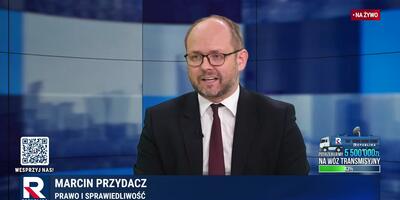
Przydacz krytykuje Niemców za odmowę zadośćuczynienia: nie chcą nawet wesprzeć wschodniej flanki NATO
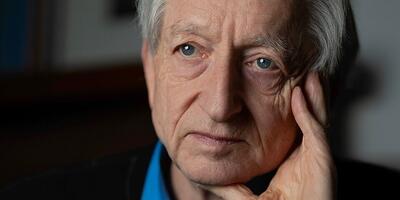
„Ojciec chrzestny” AI: Sztuczna inteligencja jest już świadoma – musimy się z nią zaprzyjaźnić, inaczej jesteśmy skończeni
AKTUALIZACJA